+86-4000873883

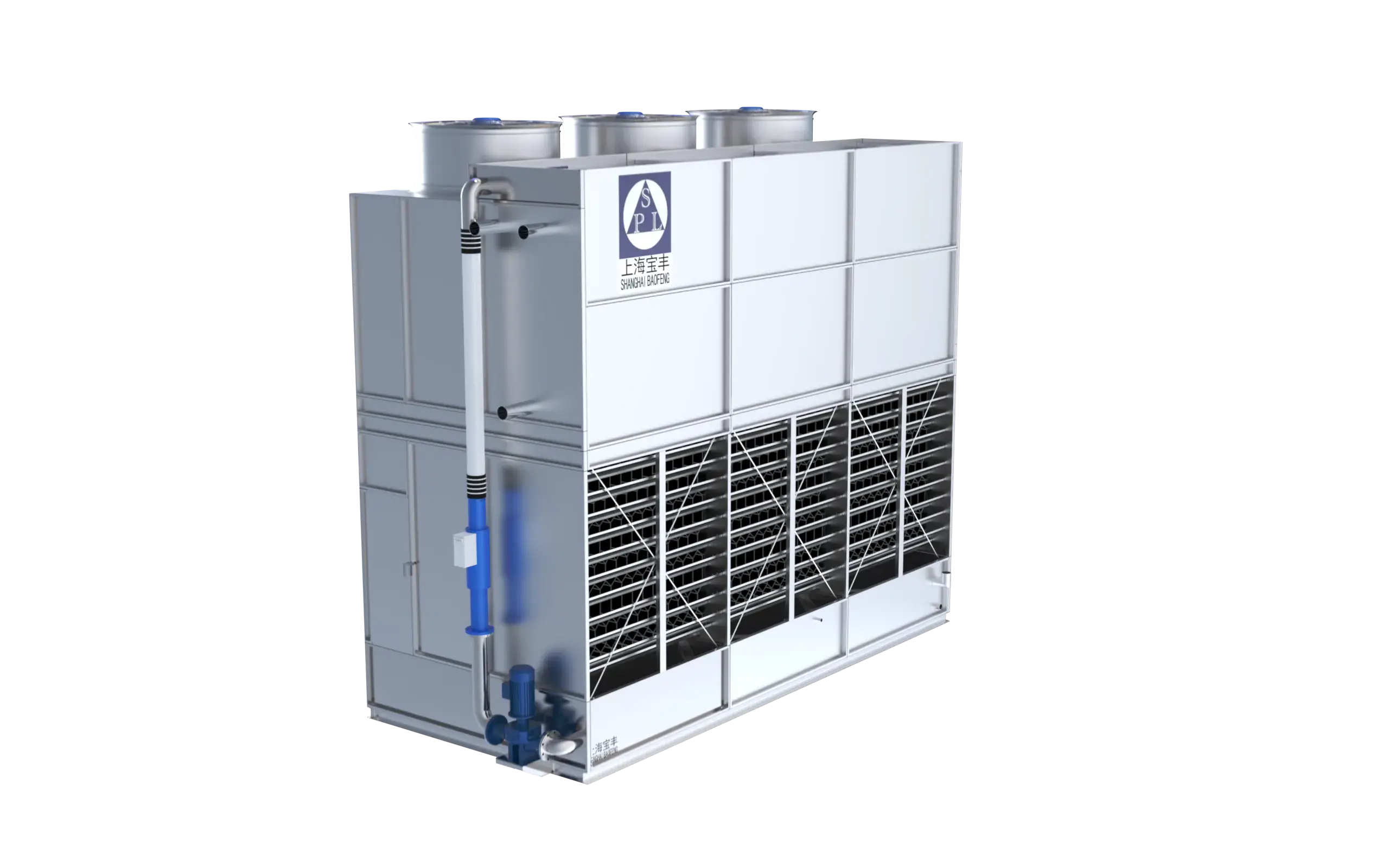
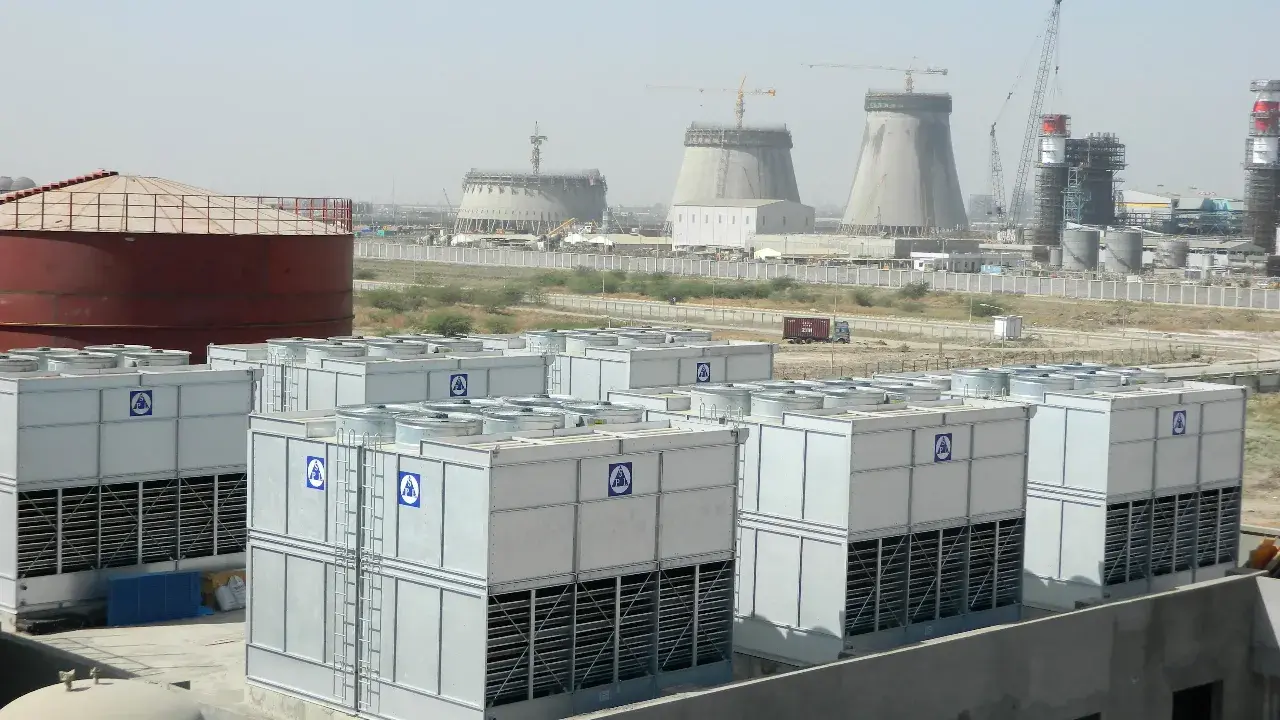
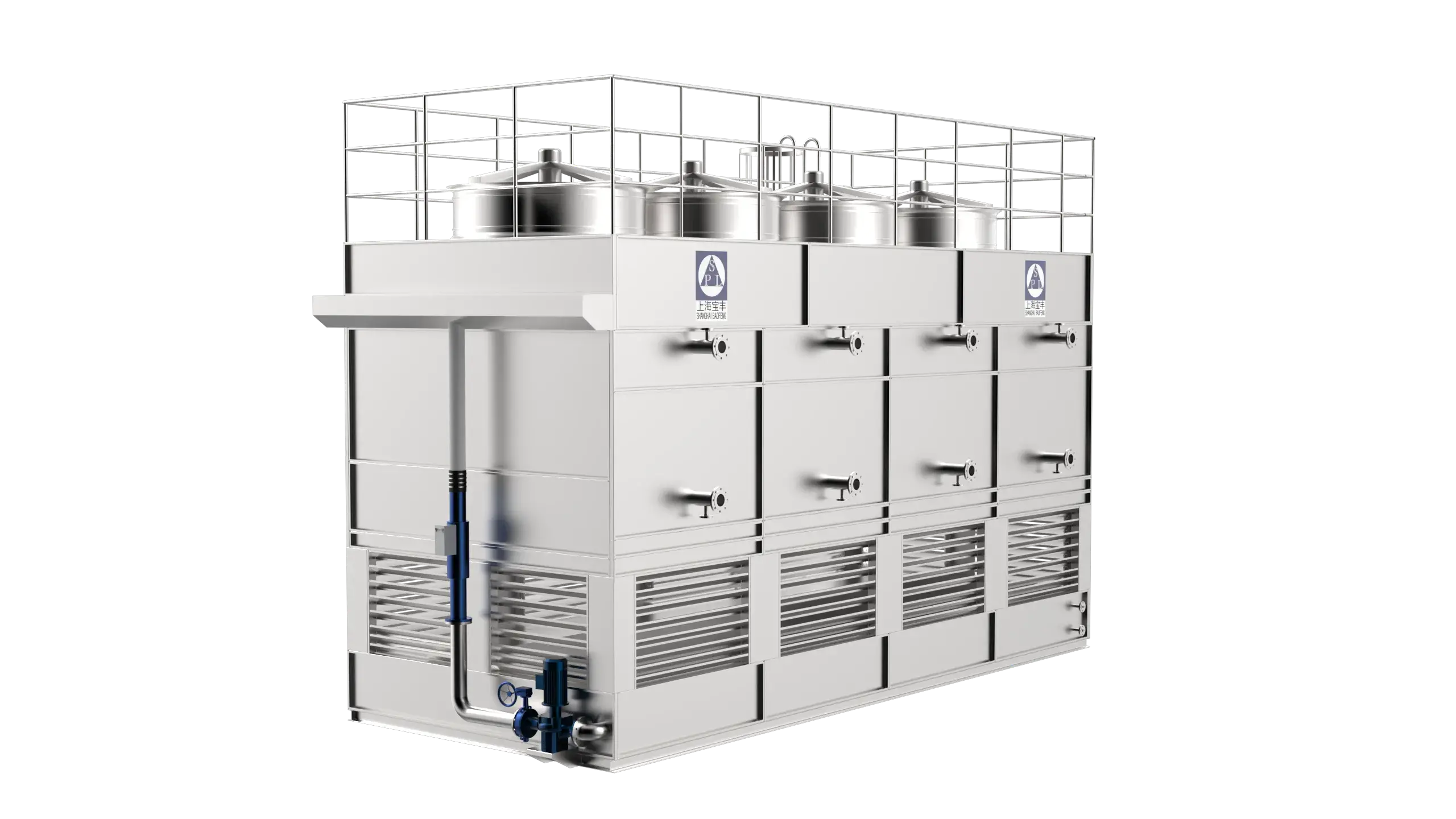
BTC-S Closed Loop Cooling Tower Counter Flow
Product Description
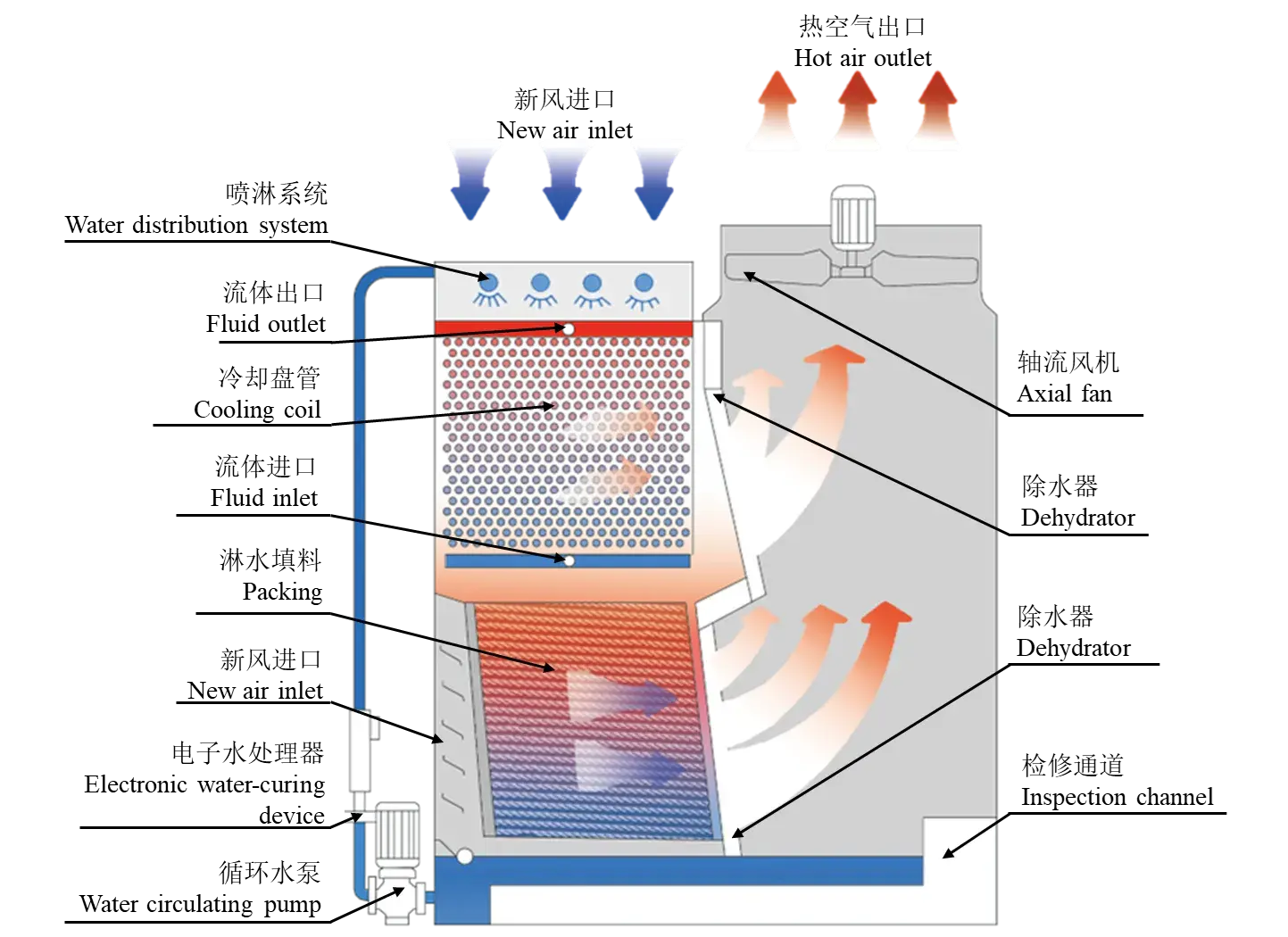
The BTC series closed cooling tower utilises water and air as cooling media, exchanging heat with the high-temperature working fluid within the coil. The high-temperature working fluid releases heat and transforms into ambient-temperature fluid. Internally fitted with a water distribution system, cooling coils, and water separators, externally equipped with a circulating water pump and electronic water treatment, with an axial fan mounted at the top. During operation, the axial fan creates a negative pressure environment inside.
Cooling water is distributed uniformly across the coil surface via the water distribution system, enabling heat exchange between the high-temperature working fluid and the water and air surrounding the coils. This enhances the cooling effect significantly. After absorbing heat from the coil walls, the cooling water temperature rises sharply. Part of the cooling water vaporises into steam, while the non-vaporised portion returns to the sump tank. The sump pump then recirculates this water back into the water distribution system for continued operation. Water lost to the atmosphere is replenished promptly via a float valve in the sump tank, which regulates the water level.
Core Definition
Parallel-flow closed cooling towers (where ‘S’ in model identification denotes parallel flow) are closed-loop systems achieving heat exchange through co-directional flow of the cooling medium (air) and cooling water. Characterised by low flow resistance, stable operation, and straightforward maintenance, they are suited for applications with minimal pressure loss requirements.
Detailed Operating Principle
1. Fundamental Structure and Medium Commonality:
Shares core design principles with counterflow systems, utilising both water and air as cooling media. Internal components include water distribution systems, cooling coils, and water separators, while externally equipped with circulating water pumps and electronic water treatment units. Axial fans mounted at the top ensure process fluids remain clean within the closed circuit, minimising scaling and maintenance requirements.
2. Co-directional Air and Water Flow:
Upon activation, the axial fan creates negative pressure, drawing fresh air through the intake (typically aligned with cooling water flow direction, predominantly top-to-bottom or side-to-side co-directional). The circulation pump conveys cooling water from the sump to the water distribution system. This water is uniformly distributed over the cooling coil surface via spray nozzles. The cooling water flows parallel to the air along the coil walls, creating a ‘co-directional parallel’ flow state that significantly reduces fluid flow resistance.
3. Heat Exchange and Energy Transfer:
The high-temperature working fluid within the coils transfers heat through the tube walls to the external cooling water. As the cooling water absorbs heat, its temperature rises, partially converting into water vapour. The co-current airflow rapidly entrains this water vapour and surface heat, continuously completing heat transfer during the downstream process. Although airflow turbulence is weaker than in counter-current systems, the low-resistance advantage enables stable, continuous heat exchange.
4. Circulation and Safeguarding Mechanism:
Unvaporised cooling water flows downwards into the bottom sump, where it is pumped back into the water distribution system for reuse. Water replenishment is automatically managed by float valves to maintain stable water levels. Moist air is treated through a demister to remove moisture before discharge, preventing equipment corrosion or water loss caused by entrained vapour. The cooled working fluid exits via the coil’s fluid outlet, returning to ambient temperature for reuse in the process.