+86-4000873883


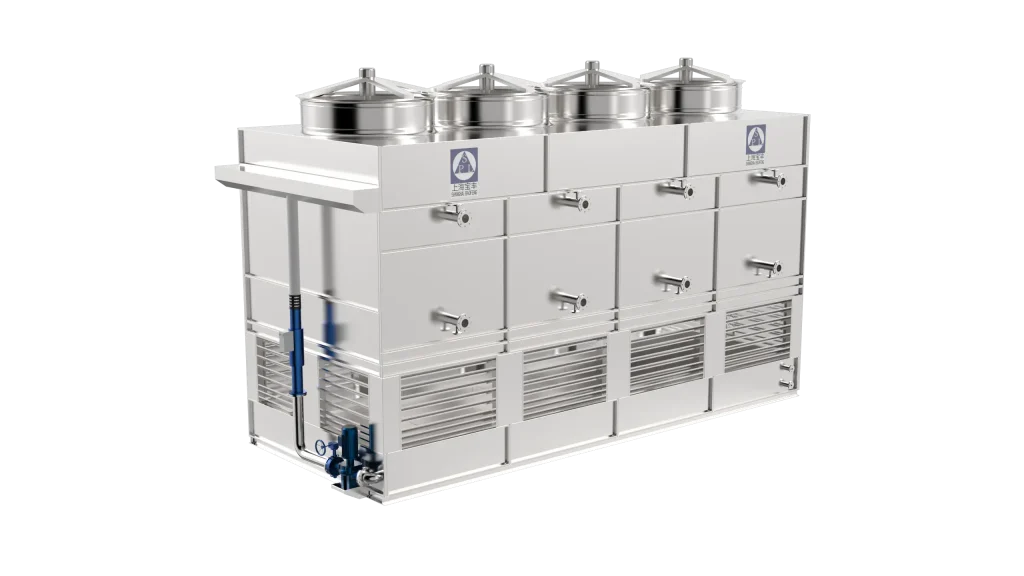
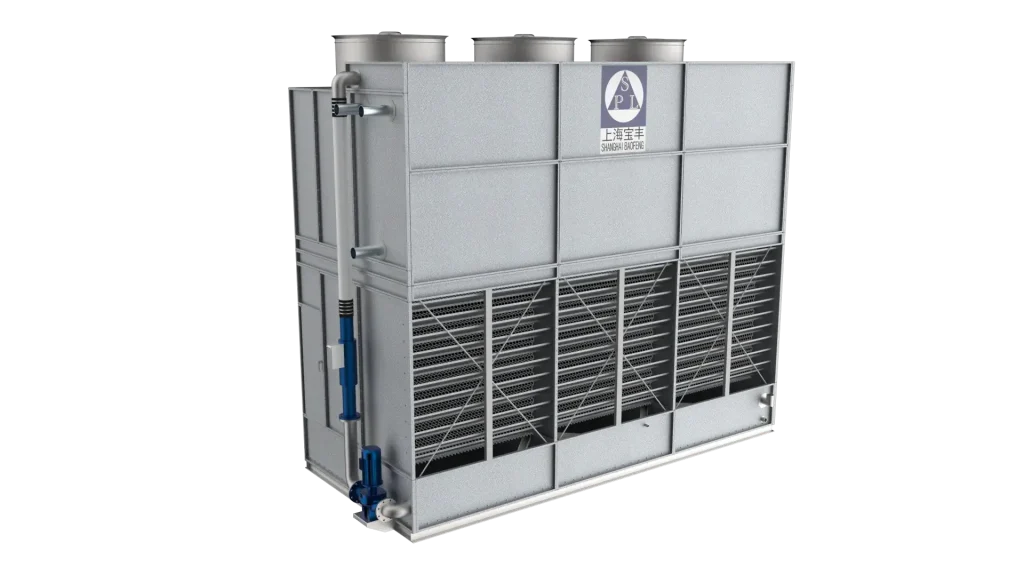
Closed-loop cooling towers are industrial heat dissipation equipment. Not only do they dissipate heat rapidly and deliver superior cooling performance, but they also offer energy-efficient operation, making them increasingly favoured by businesses.
Traditional open cooling systems present several operational challenges. Firstly, the constant replenishment of water leads to substantial water consumption. With water resources becoming increasingly scarce, this practice is becoming unsustainable. Secondly, the continuous addition of fresh circulating water increases water treatment costs and electricity expenses, imposing additional financial burdens on businesses. To address these issues, fluid coolers offer a viable alternative solution.
1. Water Conservation
Closed-loop cooling towers achieve water conservation and recycling by utilising the continuous circulation of cooling water. Unlike open systems, fluid coolers eliminate the need for constant fresh water replenishment, thereby reducing demand for tap water. This not only effectively addresses water scarcity but also lowers enterprises’ water usage costs.
Their operating principle involves circulating cooling water to lower system temperatures. After absorbing heat from the heat source within the cooling tower, the water is pumped back for recirculation and re-cooling. This cycle maximises the cooling capacity of the water, preventing substantial wastage.
Compared to traditional open cooling systems, closed-loop cooling towers not only conserve water resources but also help reduce drainage and water treatment costs. As water is recycled for cooling, fluid coolers require less frequent drainage, minimising environmental impact. Simultaneously, efficient water utilisation lowers water treatment expenses, thereby reducing operational costs for businesses.
2. Energy-Efficient Design
Firstly, closed cooling towers employ energy-efficient fans to reduce fan power consumption. Conventional towers typically utilise high-power fans to drive airflow and enhance cooling, but this approach consumes considerable energy. To mitigate this, modern closed towers utilise energy-efficient fans. These high-efficiency fans maintain adequate cooling performance while minimising energy usage.
Secondly, closed cooling towers employ plate heat exchangers to enhance heat transfer efficiency and lower cooling water temperatures. Plate heat exchangers transfer heat from the cooling water to another medium, thereby reducing the cooling water temperature. Through the use of plate heat exchangers, closed cooling towers effectively lower cooling water temperatures and improve energy utilisation efficiency. The partition wall heat exchanger incorporates high-efficiency heat transfer materials, enabling rapid and effective heat transfer to elevate overall heat exchange efficiency.
Moreover, closed cooling towers employ intelligent control systems that precisely regulate cooling water temperature and flow velocity, minimising energy wastage. This system automatically adjusts cooling water temperature and flow based on real-time operating conditions and preset parameters. Through precise regulation, closed cooling towers adapt their operational state to actual demand, preventing excessive energy consumption and thereby enhancing energy efficiency.
3. Characteristics of Closed-Circuit Cooling Towers
Rapid Heat Dissipation
Employing a dual-circuit cooling method with complete internal-external isolation, closed-circuit cooling towers deliver swift heat dissipation and exceptional cooling performance.
Energy Efficiency
These towers achieve zero evaporation and consumption of internal circulating media. Within the spray system, water is recycled, resulting in low drift rates and minimal water consumption. Furthermore, the incorporation of energy-saving components reduces consumption while ensuring high operational efficiency.
Low Operating Costs
As the circulating medium remains enclosed within heat exchange coils without direct air contact, scaling and blockages are minimised throughout the cycle, resulting in low failure rates. Unlike open cooling systems, frequent shutdowns for maintenance are unnecessary, thereby avoiding increased maintenance costs and ensuring uninterrupted production schedules.
Previous News
In the long term, why are closed-circuit coolin...Next News
Closed-Circuit Cooling Tower Assembly Process